Fish
Seahorses, rare gobies, flying fish and sex-changing wrasse; such is the amazing fish life of the relatively small Helford River estuary. The rich sheltered waters are an important nursery ground and in late summer teem with small glittering fishes. The shallow waters offer safety from many predators, though not from egrets and kingfishers; while the mud and plant life is home to tasty shrimps and worms.
Young sea breams also find this estuarine environment suits them. In the last ten years the young of the warm water Gilthead Sea Bream have appeared; and in some years small Black Sea Bream are so common that they nibble the bait off anglers’ lines before they can catch any fish.
Each summer, shoals of striped Grey Mullet can be seen cruising the estuary and even leaping clear of the water. They follow the rising tide up the shore. Their small teeth and rough lips rasp small creatures, plants, and even bacteria, off the surfaces of weeds and eelgrass; or they may simply gulp down whole mouthfuls of mud to grind in their gizzard and digest the organic matter within it.
Some of the residents have colours to rival any from the Tropics. The bright Two-spotted Goby hovers among the kelp: the blue and yellow male Dragonet with a flashing iridescent eye displays its dramatic long fins to the brown female. The salmon pink of the female Cuckoo Wrasse, even adorned with smart black and white blotches along its back, cannot match the breath-taking blue and orange of its mate, though in time, most females change into males.
The Cuckoo Wrasse, the almost as colourful Ballan Wrasse and other large fish are often attended by small wrasse, such as the Goldsinny, which act as cleaners.
The Flying Fish which in 1828 threw itself on to a sandy shore was exceptional, but a number of rare fish can be found here.
Spiny Seahorses are occasionally seen among the eelgrass, where they, and their relatives the pipefish, hide to feed on opossum shrimps that they suck out of passing swarms.
Gobies are common fishes of the estuary.
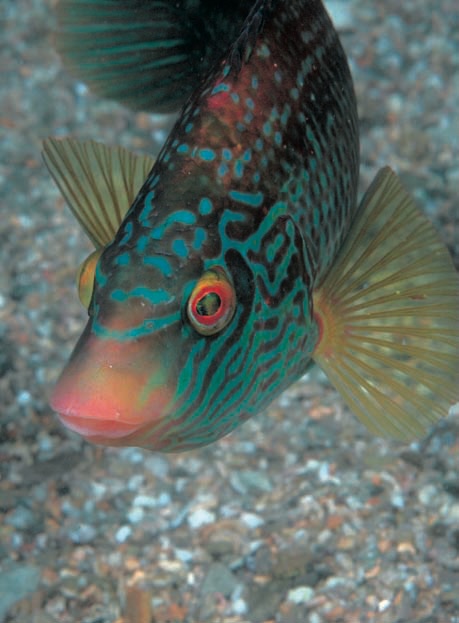 Corkwing Wrasse
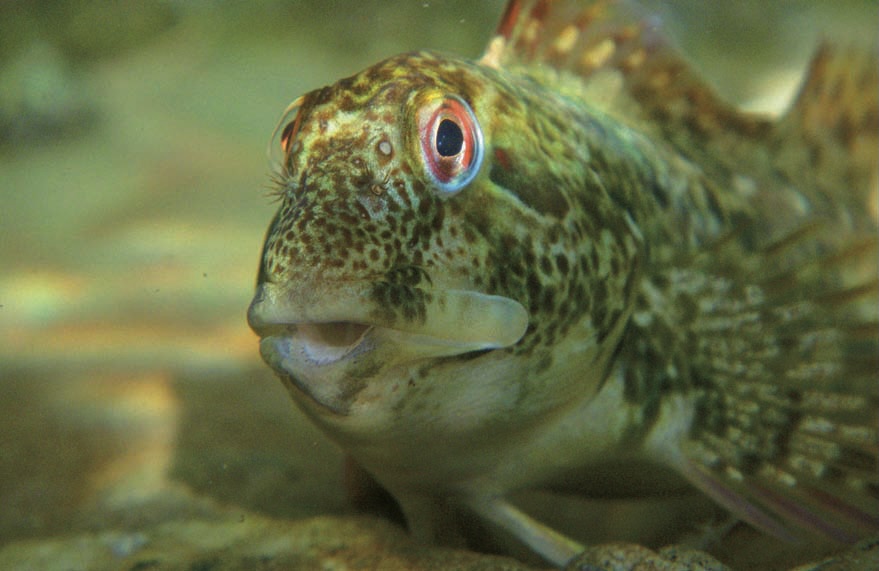 Shanny
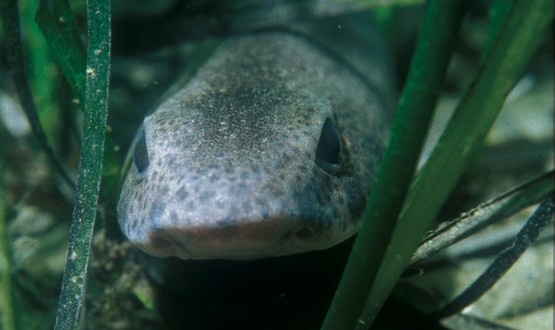
 Lesser Spotted Dogfish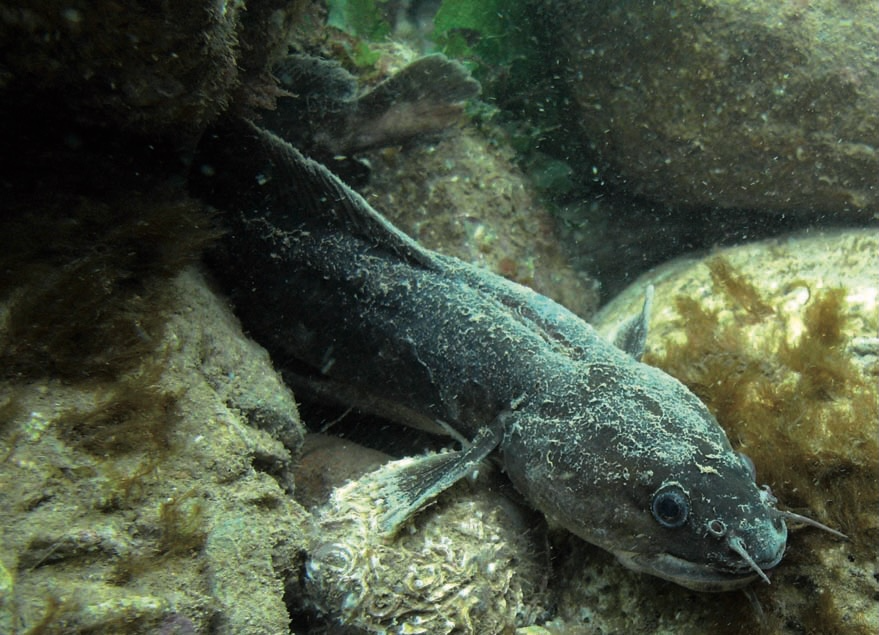
Bass nursery area
The silvery Bass is a southern species which grows slowly in local waters. The young fry are first seen in the estuary in early summer, but many will die if their first winter is a cold one. The survivors are aggressive predators thriving as they feed on shrimps, gobies and other small fish, including younger bass. After four or five years, they leave the river for the open coast and the Channel. To protect the valuable bass fishery, no fishing from boats for bass is allowed between May to December inclusive in the Nursery Area of the estuary and the minimum size that can be retained in Cornish waters is currently (2009) 37.5 cm (equivalent to a six year-old fish).
Several types can be found here, from shoals of the tiny Transparent Goby, and camouflaged Sand Gobies to the large Black Gobies, which have favoured discarded tyres as nesting sites. One goby is very special; Couch’s Goby was unknown to science until 1974 when it was first described from shallow water at Helford. This rarely-recorded(7 cm goby,) gold-tinged, with 7 to 9 small brown blotches along its flanks, has since been found in a few other localities. Numbers of the European Eel have declined drastically in recent years but they can still be found in the muddy waters or even under stones or weed on the shore.
A careful search under the weed on the shore at low water can reveal a number of fascinating fish – the little Worm Pipefish with its short upturned snout; the spiky but harmless Long- Spined Sea Scorpion with little white barbels in the corners of its mouth; the elongate brown bewhiskered Rockling (Shore Rockling with three barbels, or Five-bearded Rockling with five), whose green and silver young are known as “mackerel midges”; the Cornish Sucker with two blue ”eyes” on the back of its head; and the eel-like Butterfish, scaleless and slime covered, that slips through grasping fingers.
The Shanny, commonest blenny on most shores, is also scaleless, and under weed or in a moist cranny can breathe through its damp naked skin when out of water. Its tough jaws make short work of crabs and small winkles, and can even bite barnacles off the rocks. The small Montagu’s Blenny mainly lives in coralline rockpools and can be recognised by its pale blue spots and ornate transverse crest. Young Tompot Blennies may be found in rockpools, but are mainly seen with their tentacled heads peeping out from underwater crevices; from which they emerge to grab a tasty bite or nibble a sea anemone.
Text: D. M. Herdson
Photograph credits: J. Hepburn, D. Peake, T. Sutton, S. Trewhella