Inshore Fisheries and Conservation Authorities
In April 2011 the Sea Fisheries Committees (SFCs), many of which have been in existence since the end of the 19th Century, will be replaced by Inshore Fisheries and Conservation Authorities (IFCAs).
IFCAs will be set up under the provisions of the Marine Bill. The Association of SFCs has been pressing for updated legislation for many years. The current legislation dates back to when the first SFCs were formed. The Bill is therefore very welcome.
One of the main issues which has been under consideration is IFCA boundaries. There have been suggestions that the IFCAs should be much bigger than the existing SFCs. In particular there was a proposal that there would be one large IFCA including Devon, Cornwall and the Isles of Scilly. Fortunately the benefits of good local management has been recognised and Cornwall SFC will become an IFCA in its own right.
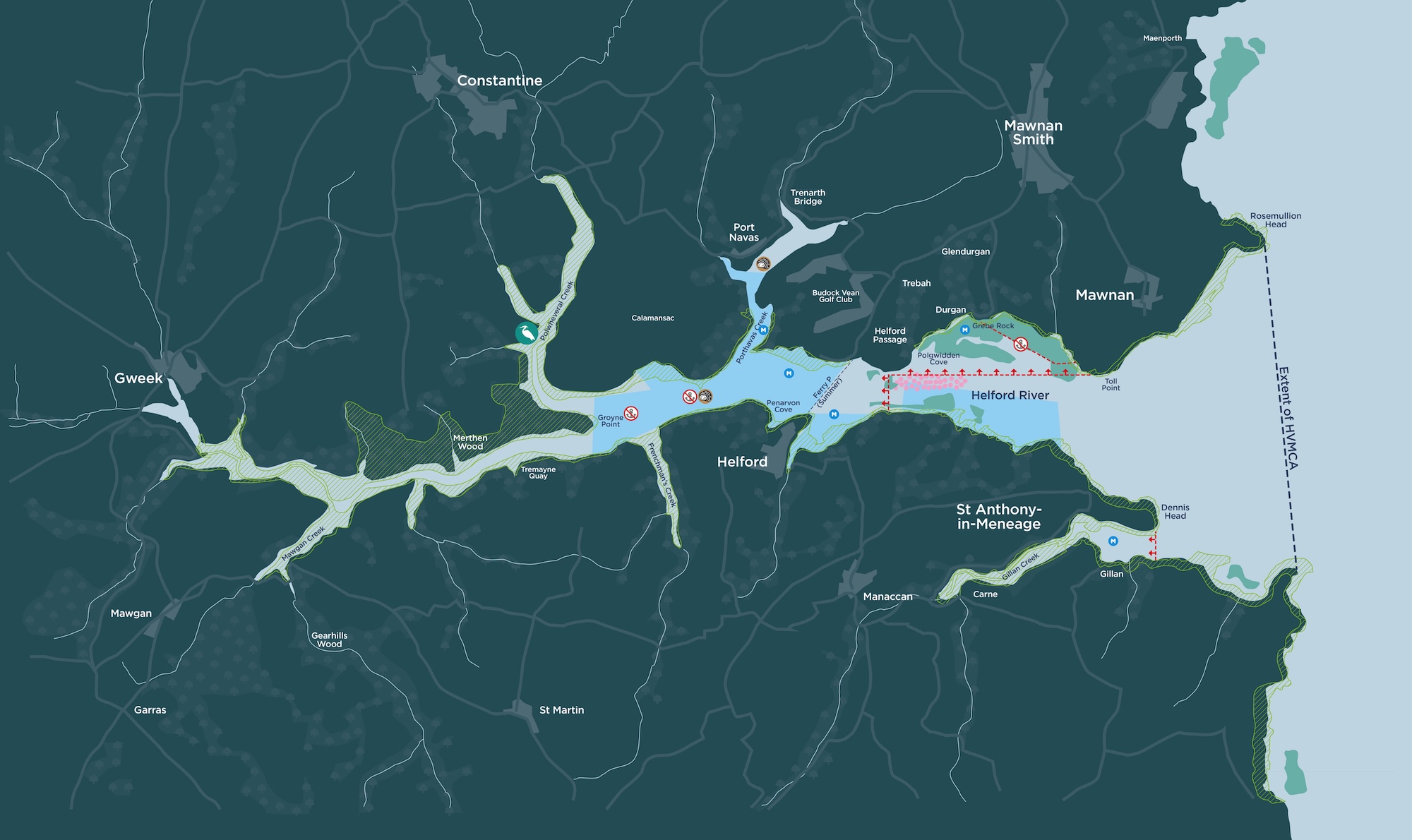
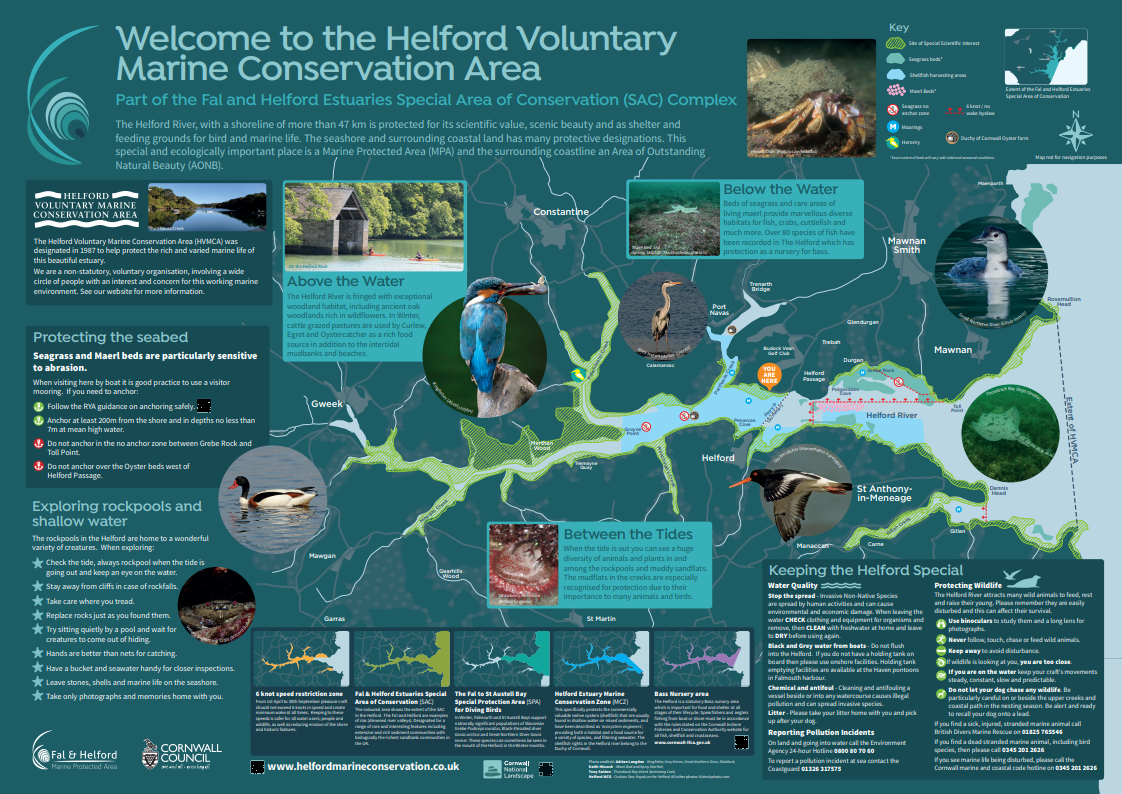
One fundamental change however is that the new IFCA will manage the estuaries of Cornwall which is of particular importance for the Helford VMCA. This will have great benefits for enforcement. For example, at present, lobsters caught in the estuaries are covered by the Minimum Landing Size (MLS) set down by the E.U. namely 87mm. This enables an unscrupulous fisherman to lay pots in the estuary and claim that any lobsters which he catches outside the estuary of between 87 and 90mm (the MLS prescribed by Cornwall SFC) were caught inside the estuary. It is virtually impossible for our Fisheries Officers to prove otherwise.
The Environment Agency will still have responsibility for salmonids and migratory species and other obligations including inside the estuary and also within one mile under the Water Framework Directive.
Marine Conservation Zones (MCZs) will be introduced under the Marine Bill aiming to assist in halting the decline in biodiversity and improving the health of our ecosystems by conserving our oceans’ flora, fauna and habitats. Unlike other conservation sites such as Special Areas of Conservation, MCZs will be unique in their designation as proposals will take account of the socio-economic impacts of their management. MCZs are due to be designated by 2012.
IFCAs will police the MCZs within the 6 mile limit and also at the request of the Marine Management Organisation (MMO) beyond it. IFCAs will also have the power to make byelaws in their district for MCZs.
In conclusion the Marine Bill will introduce a period of great change with the creation of IFCAs. There will be new duties and responsibilities, in particular with reference to environmental issues.
David Muirhead MBE
Chairman of Helford Marine Conservation Group
Chairman of Cornwall Sea Fisheries Committee
Chairman of Cadgwith, Helston & District Fishermen’s Society Ltd
Inshore Fisheries and Conservation Authorities
Extract from HVMCA newsletter No.39 Autumn 2009