Helford Conservation Cruise

1st July 2012

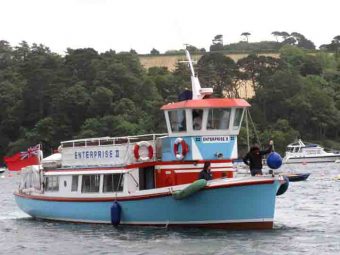
The 19th Annual Conservation cruise set off on a dry day with a few grey clouds and
a brisk westerly wind. The “Enterprise” boat skipper with his intimate knowledge of
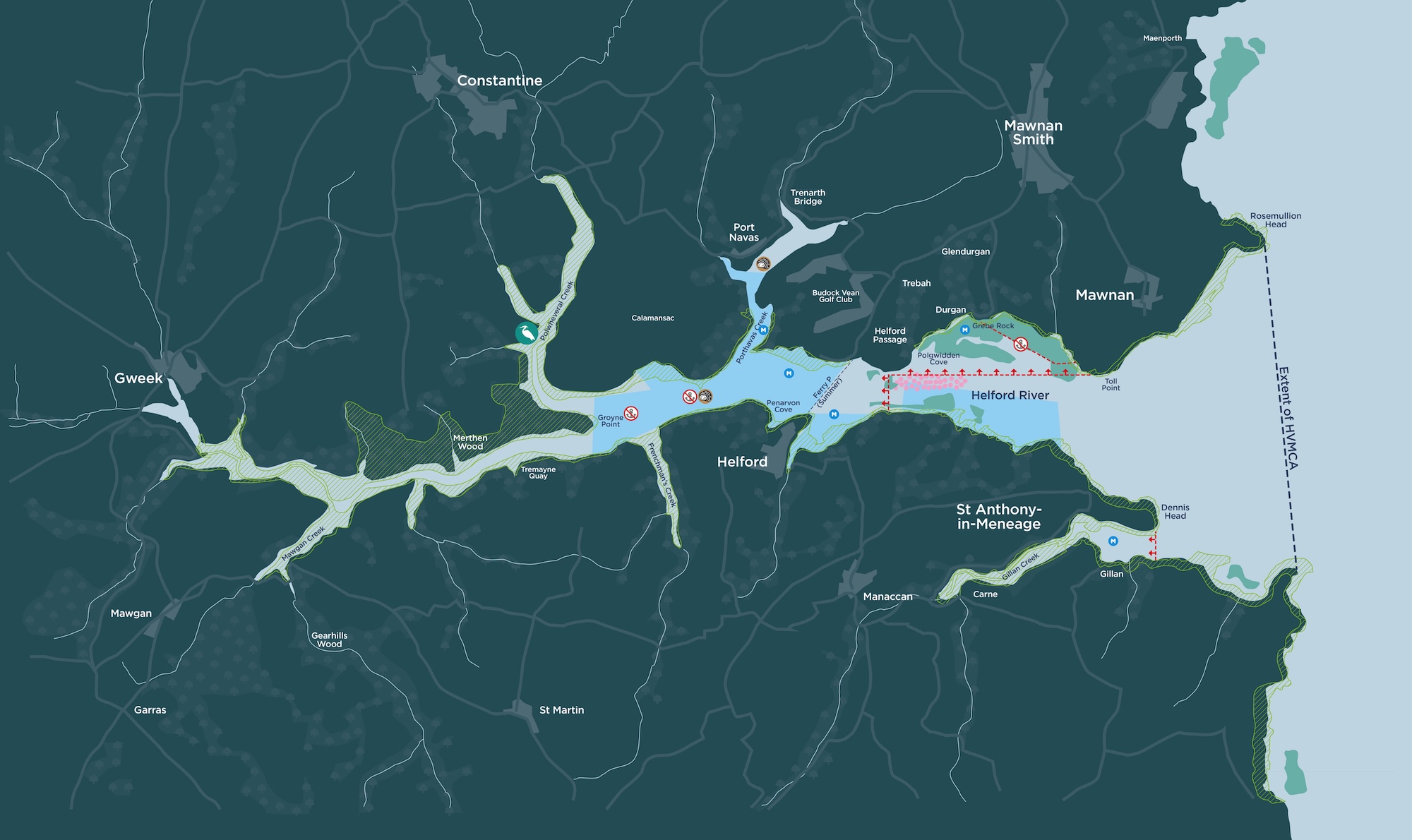
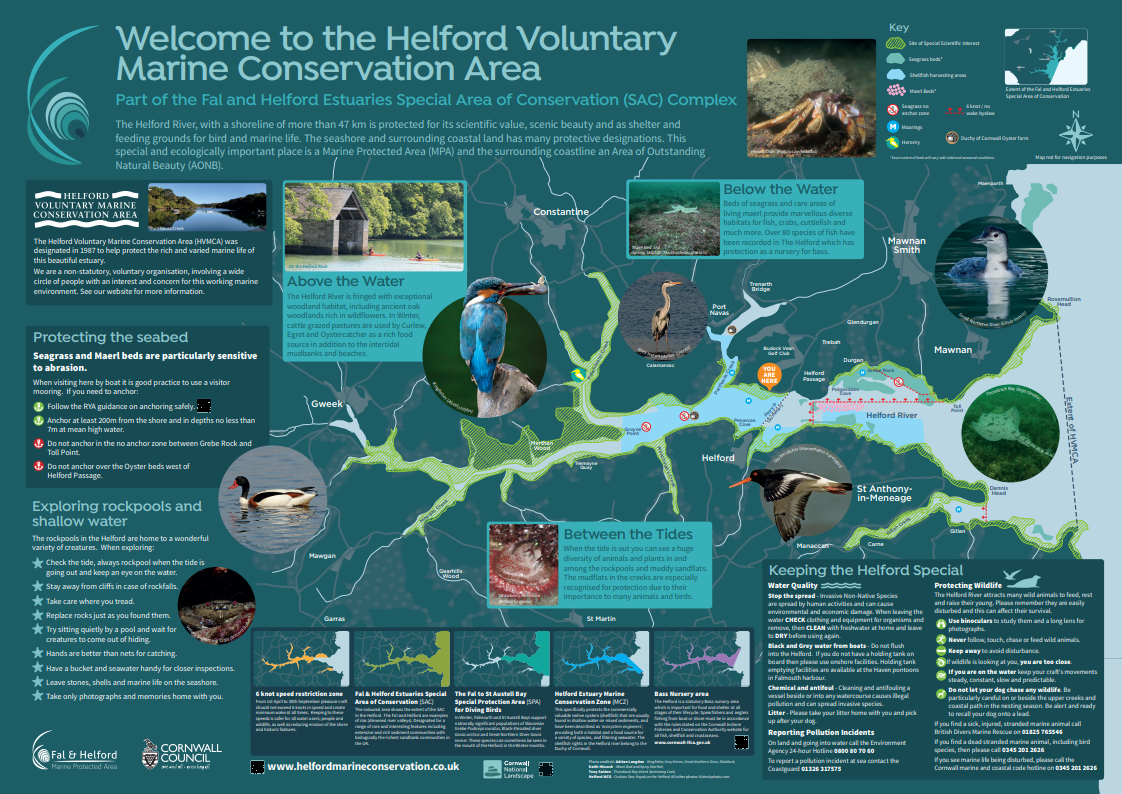
the channels and mud banks took us high up into the creeks, the haunt of shelduck,
sandpiper, redshank, heron and little egret.

A peregrine falcon gave a stunning aerial display over Dennis Head, whilst a sparrowhawk
swooped along the woodland edge in the upper creeks where two pairs of shelduck with
grey downy chicks could be seen awaiting the fall of the tide.

Ancient oak woodland fringed much of the shoreline contrasting with the impressive Sea-
Core Fugro drilling platforms at Gweek.

Sea-water tanks on-board with National Trust volunteers, gave an opportunity to see
various shore species such as crabs and anemones at close quarters.

Whilst the 100 passengers were charmed by the beauty of the trees above the ruffled
water, they also enjoyed their tea or coffee as they learnt more about the birds, the fish
and fishing, management of the land and woods, geology, local history and industries and
most importantly the whole marine web of life.

Sailors and land-lubbers alike appreciated the timeless beauty of the secluded waters,
muddy creeks, woodland tapestry and rocky shores and the importance of protection for
this vulnerable sheltered arm of the sea.

Andrew Tompsett
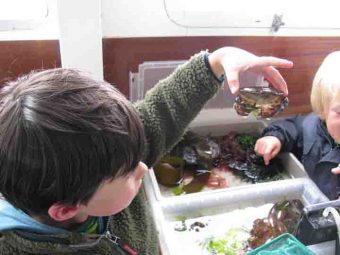
Edible crab. Image: Pam Tompsett.
Helford Marine Conservation Cruise. Image: Pam Tompsett.

Similar Posts

  • Coastal Ketches and Inside Barges (Andy Wyke)

    14 January 2012

    ‘A sewn boat? What’s that?’ ‘Well, it was a way of constructing boats in the Bronze Age, about 2500 BC, before nails had been invented. With the tools available at the time, bronze axes and adzes, logs would be split and fashioned into planks, to be stitched edge-to-edge with fibres from yew branches. Moss was used for caulking.’

    Our speaker, Andy Wyke, was well qualified to tell us. As Boat Collection Manager at the National Maritime Museum Cornwall, he has been one of the prime movers in a project which will use ancient tools to build a 60ft replica Bronze Age boat at the museum this summer (Apr – Sep), in an open workshop on view to the public.

  • Seashore Safari

    Saturday, 25th July 2009

    Clearly something interesting was about to happen as a group of nearly 30 people, adults and children, gathered on the beach at Helford Passage for a short introductory talk by Ruth Williams, Cornwall Wildlife Trust’s Marine Officer. Then, armed with an assortment of nets, buckets and trays, we set off, clambering over limpet- and barnacle-strewn rocks to the shallow pools left by the receding tide. The Seashore Safari had begun. Weather conditions were ideal – sunny and warm with a slight breeze. Intrigued holidaying families joined in; and by now the numbers had swelled to 40, of whom half were children.

  • Cornish Dolphins – an update (Dr Nick Tregenza)

    Saturday, 23rd January 2010

    In his talk to an appreciative audience of 57, Dr Tregenza began with the largest cetaceans, the whales, showing photographs of stranded animals, alive and dead, and mid-water sightings. It was a surprise to hear of the great variety of whales which have been recorded in Cornish waters, for example a Baleen whale at Sennen, Fin whales around the Lizard and Lands End and Sei whale in Carrick Roads.

  • Bats know best!

    Sunday, 6th September 2009

    Over 30 friends and members of the Helford MCG gathered at Mawgan Village Hall for an evening “bat talk and walk”. Dr Carol Williams, with her characteristic enthusiasm, delivered a 30 min. crash course in bat identification, life-cycle and habits before we ventured out into the gathering gloom assembling in the woodland car park on the Trelowarren Estate. Bat detectors swung into action immediately and to our delight we heard several pipistrelle bats as they hunted for insects overhead using their stuttering echo-location calls.

  • The National Trust around the Helford

    Saturday, 16th October 2010

    Justin Whitehouse, National Trust Area Warden for the Lizard, first became associated with the National Trust as a volunteer shortly after graduating as a botanist and moving to Cornwall in 1994. His daily journey to work involved rowing across the river from Porth Navas to the office at Helford. Subsequently came five years work at Trelissick and then a return permanently to the Lizard, back to the woodlands and creeks that he preferred.