Annual Conservation Cruise

8 July 2007

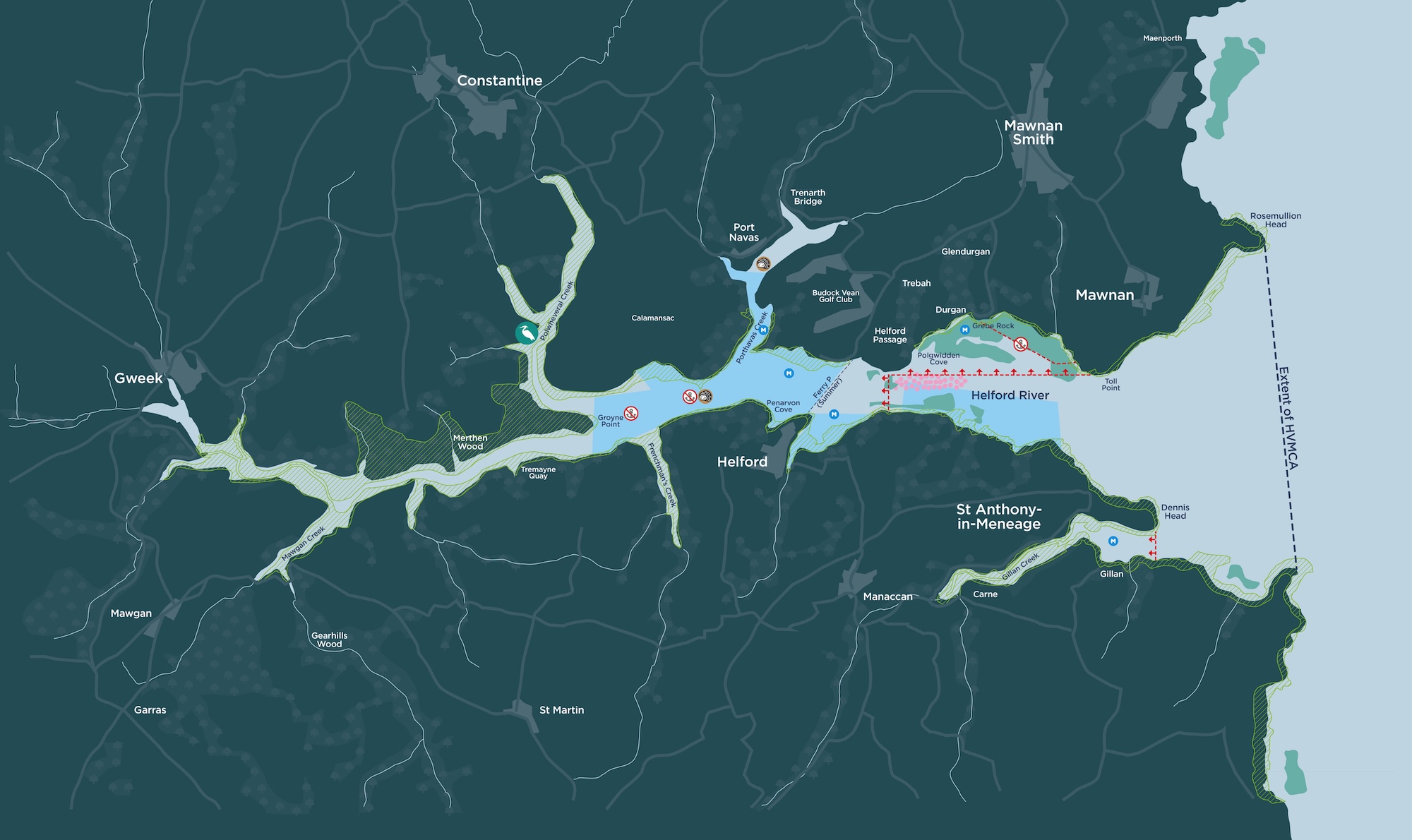
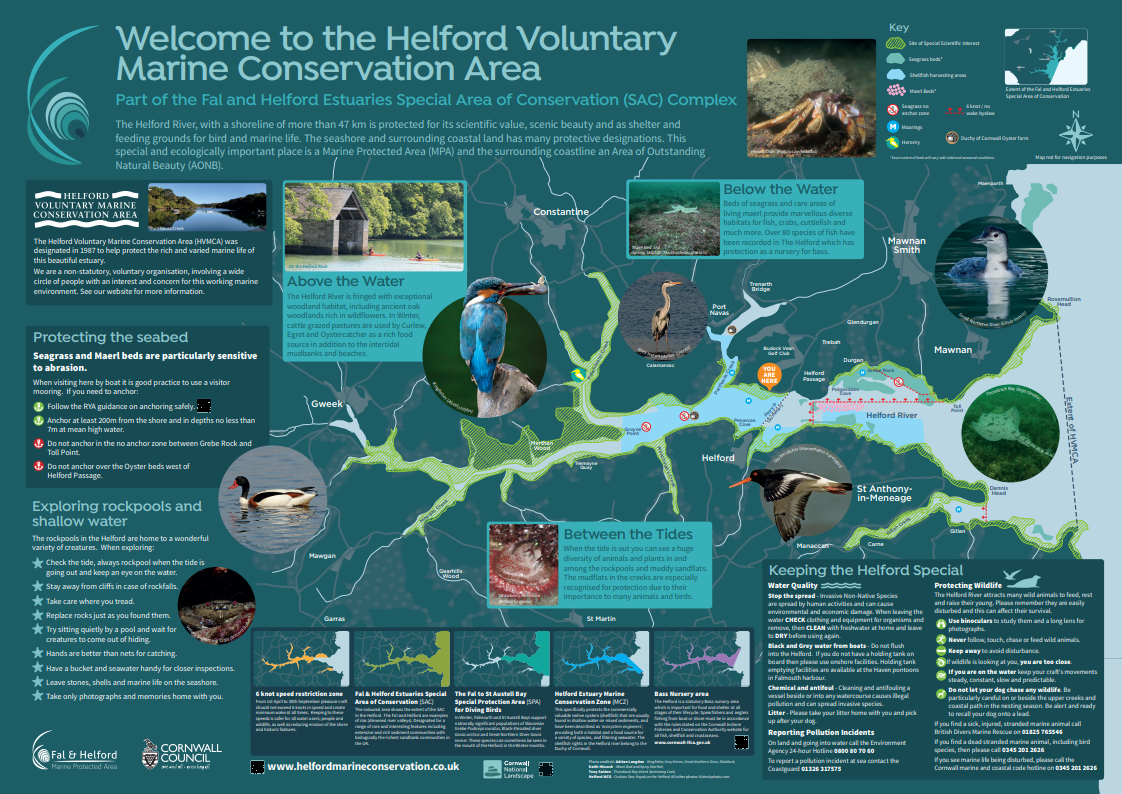
After weeks of heavy rain countrywide we hardly dared to hope for our “traditional” sunny day for the cruise but we were not disappointed as the sun shone brightly until obscured by cloud at the very end of the afternoon! The water sparkled against the soft green of the Helford woodlands. In Polwheveral Creek our enthusiastic passengers saw 15+ snowy white Little egrets around their nesting site in the trees by the heronry and overhead buzzards were mewing. Upstream two pairs of shelduck and their families paddled vigorously as we passed whilst curlew, redshank, greenshank and some smaller waders probed the mud for food.

Helford MC Group members spoke knowledgeably about the fish and fishing as well as the various boats as we cruised round to the picturesque Gillan inlet. Geological features, land use, marine research, eelgrass beds and the Helford oysters were not forgotten. The National Trust warden and volunteers were on hand with information about the woodlands and their management and displayed a wide range of rock pool and other marine flora and fauna in their marine tanks onboard.
It was a perfect opportunity to encourage everyone to think carefully about the sensitivity of the marine environment and the need to protect it through energetic local and national efforts.

Similar Posts

  • Seashore Safari

    Thursday, 1st April 2010

    The beach in front of the Ferryboat Inn resembled a market day, with a group of colourful tables, a banner and a leaflet stand, all weighted by heavy rocks against the brisk, rather chilly wind. Abby Crosby, with Emma and other volunteers, had brought her displays for the Cornwall Wildlife Trust’s ‘Your Shore’ Project, teaming up with Ruth Williams’ ‘Seashore Safari’; and so there was no lack of expert knowledge as people crowded round the tables to look in the tanks and trays at live creatures collected from nearby rock pools.

  • Tales of a Wildlife Photographer (David Chapman)

    Saturday, 11th December 2010

    Is that a pin-tailed duck? No, it’s a long-tailed duck. Isn’t that a gannet? No, it’s a black-tailed godwit. We were trying to identify birds on David Chapman’s jumper, knitted by his mother who had produced separate jerseys for different talks. His outdoor gear depended on conditions, one photograph showing military-style camouflaged top and trousers, plus a back-pack to carry a tripod, camera and lenses and a chest-pack containing a portable hide. When erected, the last looked like a camouflaged igloo, just large enough to accommodate David and Adrian Langdon for several hours bird watching at the Walmsley Reserve. His account of that outing was returned by Adrian with the comment that the phrase “the mud came nearly to the top of our wellies” had a typographical error in the final word!

  • Non-native Marine Invasive Species (Guy Baker)

    Saturday, 26th February 2011
    “You should clean your bottom every year”! Australians and New Zealanders are known for plain speaking, but this seemed unnecessarily rude. However, just to clarify, they were talking in this instance about the hull of your boat. The point was quickly driven home by an underwater film, taken in N.France, which showed a hull so thickly coated with weeds and invertebrates that it looked like a sagging roll of shaggy carpet. Boat fouling is a worldwide problem and marinas and harbours are important staging posts in the process, because hulls, piers and jetties provide numerous firm surfaces on which sessile plants and animals can gain a foothold.