Bats know best!

Sunday, 6th September 2009

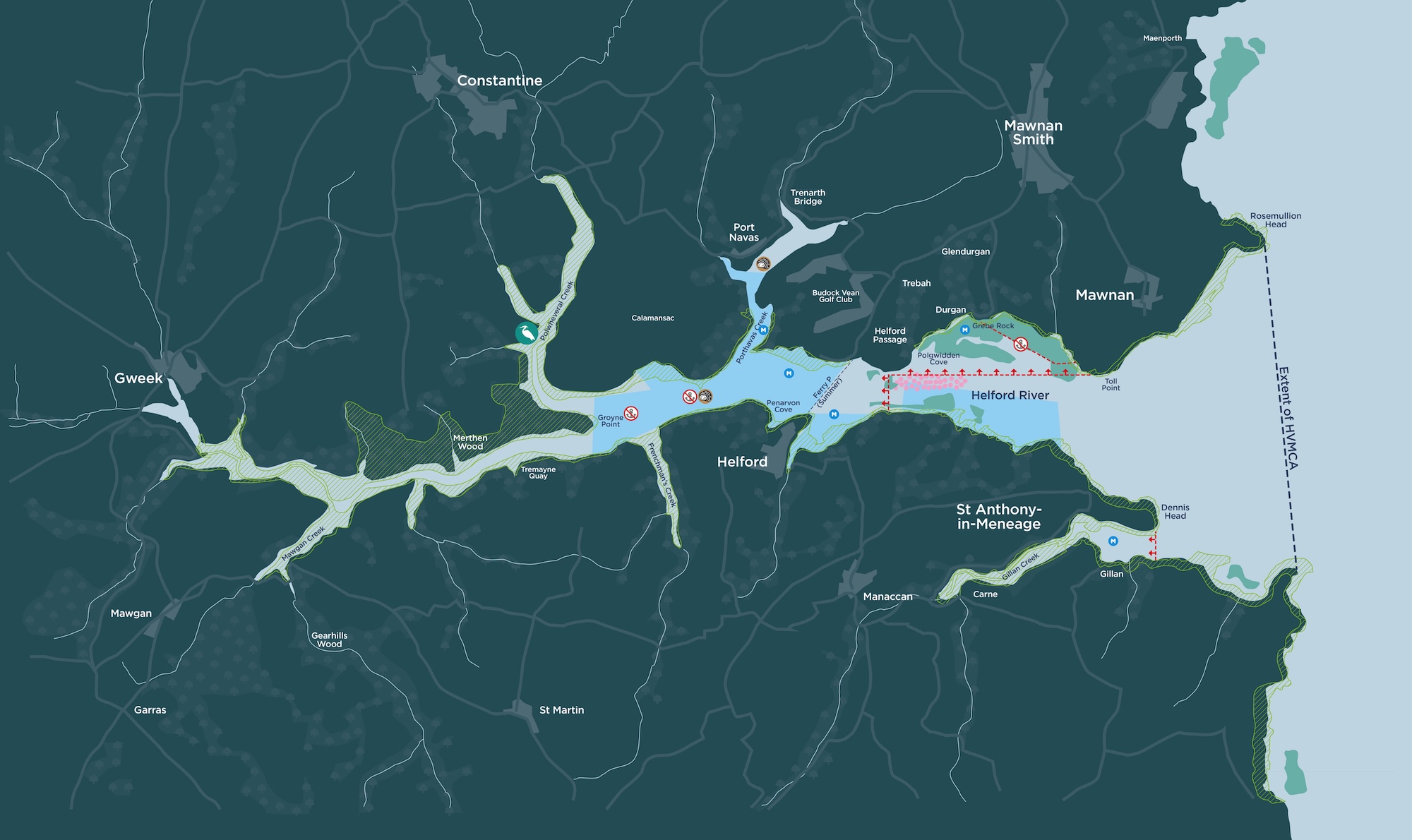
Over 30 friends and members of the Helford MCG gathered at Mawgan Village Hall for an evening “bat talk and walk”. Dr Carol Williams, with her characteristic enthusiasm, delivered a 30 min. crash course in bat identification, life-cycle and habits before we ventured out into the gathering gloom assembling in the woodland car park on the Trelowarren Estate. Bat detectors swung into action immediately and to our delight we heard several pipistrelle bats as they hunted for insects overhead using their stuttering echo-location calls.

Carol had stressed the richness of the Helford River woodlands for 16 species of bat so we set out with great expectations from the car park to the lawns and buildings adjacent to the main house. The moon rose as we toured the extensive grounds and the tawny owls hooted in the woods but bats – they were silent! With ears fully attuned and waiting we quietly discussed the habits of bats, when are the young born – early summer, hopefully as the weather warms and insects are on the wing? How far from the roost do bats hunt for food – most within 1km but others, such as the robust high-flying noctules can travel much further? Do males and non- breeding females frequent the nursery roosts – no?

Perhaps the strong evening breeze had deterred the insects? We headed back to the car park woodland and WOW! Immediately we heard the Common pipistrelle echo-locating at 45khz and hunting overhead. Our detectors positively vibrated with the sound. At one stage there were also social calls indicating that there were male bats in the vicinity displaying and courting over-head. This was the moment that the sensitive infra-red binoculars swung into action and some people were lucky enough to catch glimpse of the aerial displays.

The sheltered car park may have been warmer that night favouring the insects or was this a chance encounter with a courting area (or ‘lec’) frequented by male bats strutting their stuff for the benefit of the ladies? It was an evening to remember, confirming what Carol had told us, that bats really do know best when it comes to finding the best places for a good night out.
Similar Posts

  • Helford Conservation Cruise

    Sunday, 11th July 2010

    Once again, the weather was kind, producing a warm, dry and wind-free day. With 95 passengers on board, plus tanks containing a variety of live fish, crabs and other creatures, the Enterprise boat headed to the mouth of the estuary and around into Gillan Creek, in sight of St Anthony church. The National Trust owns two small properties on the south bank, one containing Bronze Age barrows and an Iron Age cliff castle. Looking seaward there was a clear view of Nare Point and its observation post, now occupied by Coastwatch, but, during WWII, part of a testing range for air-drop torpedoes.

  • Wreck and Torpedoes to Coastwatch – the extraordinary history of Nare Point.

    5th December 2009

    Nare Point, at the south-east corner of the Helford estuary, appears to be unremarkable, just another of the many Cornish headlands although with a look-out post on top. But if an author had decided to weave a story about it, such as was about to be told by our two speakers from the National Coastwatch Institution, Paul Phillips and Len Jepp, he would be accused of having a fevered imagination.

  • Rockpool Ramble at Prisk Cove

    21st August 2012

    The weather didn’t bode well for our Rockpool Ramble event at Prisk on Tuesday 21st August, with heavy showers hitting hard as we drove to our meeting point. However, by the time we all assembled at Mawnan Church car park the sun was shining and the afternoon turned out to be warm and beautiful. We were a small group with only three families from Helston, Truro and Perranporth, and a keen naturalist from Penzance who very kindly recorded our day’s findings for the Environmental Records Centre for Cornwall and Isles of Scilly. I was also joined by three enthusiastic members of the Helford Marine Conservation Group – Paul Garrard, Dave Thompson and Rhiannon Pipkin.

  • Plankton on Parade

    Saturday, 13th November 2010

    The term ‘plankton’ comes from a Greek word meaning ‘wanderer’ or ‘made to wander’,an apt description for creatures which drift at the mercy of winds and currents. Some are large and easily seen – the Macroplankton, such as jellyfish and the Portuguese man-o’-war. Others are small – the Microplankton, which measure a millimetre or so across – or less – and are studied using a microscope. These are collected with a conical fine-mesh net swept or towed through the water and they include a great variety of plants and animals, in adult or larval stages. There is a third, even smaller, size category – the Nanoplankton, such as coccolithophores, which are just a few microns across and only seen with the aid of an electron microscope.

  • The National Trust around the Helford

    Saturday, 16th October 2010

    Justin Whitehouse, National Trust Area Warden for the Lizard, first became associated with the National Trust as a volunteer shortly after graduating as a botanist and moving to Cornwall in 1994. His daily journey to work involved rowing across the river from Porth Navas to the office at Helford. Subsequently came five years work at Trelissick and then a return permanently to the Lizard, back to the woodlands and creeks that he preferred.

  • Non-native Marine Invasive Species (Guy Baker)

    Saturday, 26th February 2011
    “You should clean your bottom every year”! Australians and New Zealanders are known for plain speaking, but this seemed unnecessarily rude. However, just to clarify, they were talking in this instance about the hull of your boat. The point was quickly driven home by an underwater film, taken in N.France, which showed a hull so thickly coated with weeds and invertebrates that it looked like a sagging roll of shaggy carpet. Boat fouling is a worldwide problem and marinas and harbours are important staging posts in the process, because hulls, piers and jetties provide numerous firm surfaces on which sessile plants and animals can gain a foothold.